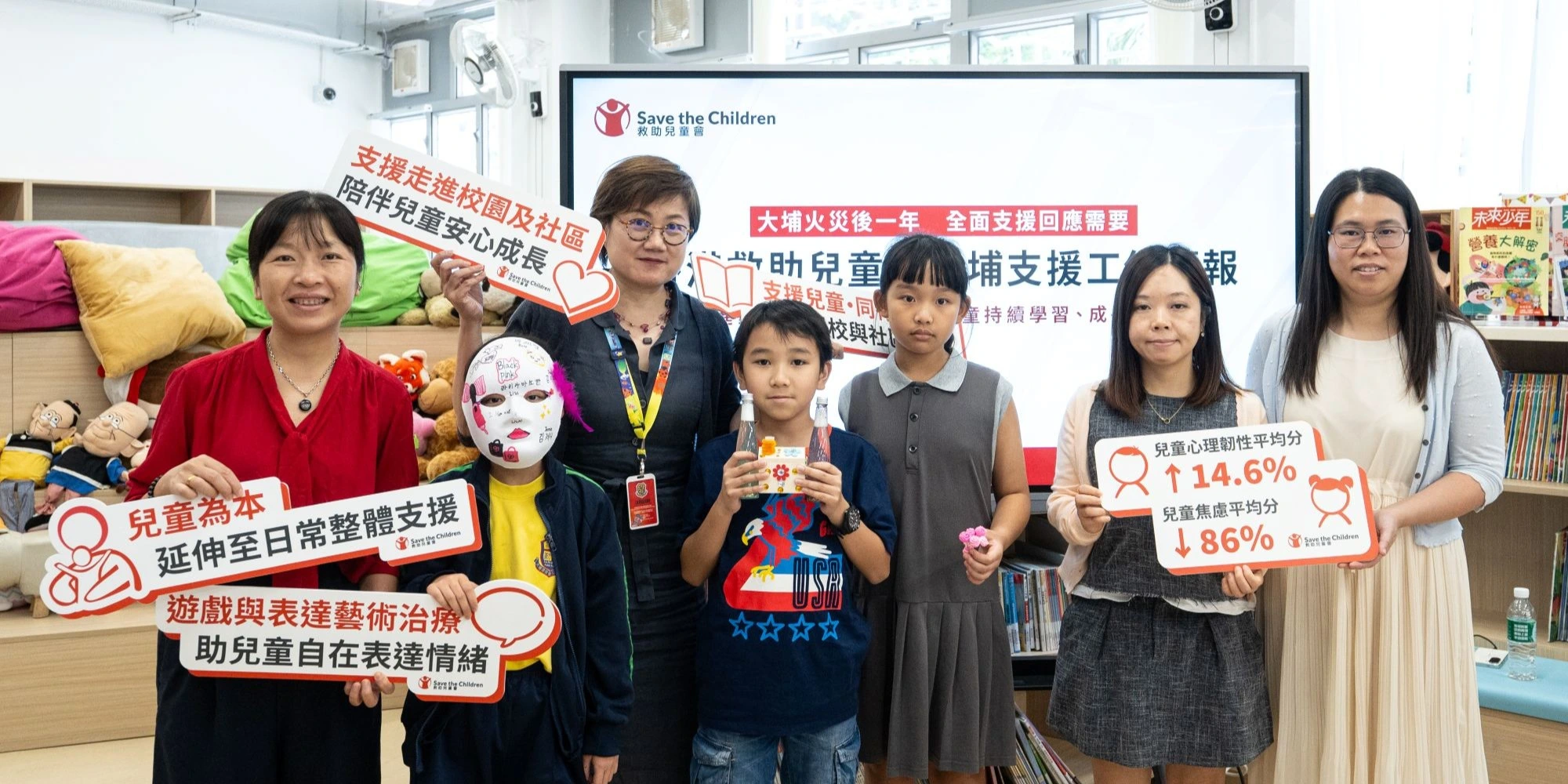
Nearly one year after the Tai Po blaze, affected families are gradually rebuilding their lives. However, the effects of a major incident on children and families, and their resulting needs, may emerge gradually at different stages. They may also evolve over time as living circumstances, family situations and children’s stages of development change. Post-disaster support must therefore extend beyond the emergency response phase and continue to address the evolving needs of children, caregivers, schools and communities.
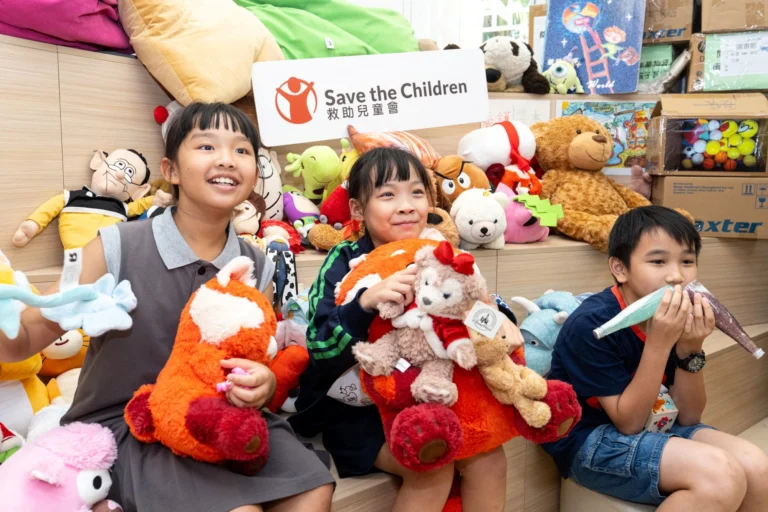
Immediately after the blaze, Save the Children Hong Kong provided affected children with cash assistance, stationery and other learning supplies. Children living in transitional housing received children’s tableware, thermal clothing and storybooks, while comfort toys were distributed to kindergarten pupils in Tai Po. In partnership with the Department of Counselling and Psychology at Hong Kong Shue Yan University, Save the Children Hong Kong also established a psychological support hotline to provide counselling services and support subsequent recovery efforts. As recovery work progressed, support expanded to Play Therapy and Expressive Arts Therapy, workshops for parents and teachers, parent-child activities, and more intensive individual counselling support.
Save the Children Hong Kong also launched the Shine Futures Support Programme, providing financial assistance to children directly affected by the blaze. Based on each child’s individual needs, the programme helps them work towards personal goals that support the gradual restoration of daily routines and rebuilding of a sense of security. This may include support for learning and interest development, or the purchase of important items with particular personal significance to the child. These efforts not only address children’s immediate emotional and adjustment needs, but also help them continue learning, develop their interests and maintain social connections. In doing so, the support enables children to continue growing and developing, while progressively rebuilding their sense of security and hope for the future.
From Emergency Response to Longer-term Recovery Support Across Families, Schools and Communities
Drawing on Save the Children’s international humanitarian experience, children’s post-disaster responses may not appear immediately and may emerge as their living circumstances and stages of development change. The effects of a major incident may extend beyond children to caregivers and the whole family, while family members’ emotions and coping responses often influence one another. Children’s recovery is therefore not only about reducing negative emotions. It also includes regaining a sense of security, developing interests and motivation to learn, and building the ability to express and regulate emotions. Maintaining connections with family and peers, continuing to participate in social life and growing healthily are also important parts of the recovery process.
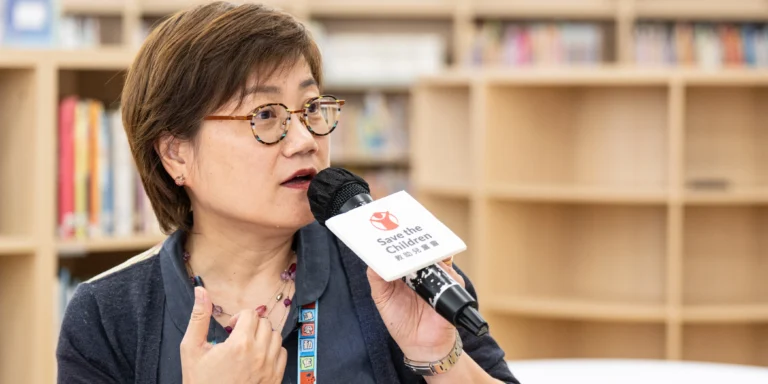
Wong Shek Hung, Director of Hong Kong Programme at Save the Children Hong Kong, said: “One year after a disaster is not a deadline for recovery, and returning to the classroom does not mean that the needs of children and families have disappeared. Children’s recovery is influenced by the people and environments they encounter every day, including their families, schools and communities. We therefore support not only children, but also work alongside caregivers, teachers and schools so that support continues in daily life. When children have a sense of security, stable social relationships and sufficient opportunities to participate, they are confident and better able to cope with change, continue learning and developing, and gradually rebuild hope for the future.”
Immediately after the blaze, Save the Children Hong Kong provided affected pupils with cash assistance, stationery and other learning supplies. Children living in transitional housing received children’s tableware, thermal clothing and storybooks, while comfort toys were distributed to kindergarten pupils in Tai Po. Save the Children Hong Kong also worked with the Department of Counselling and Psychology at Hong Kong Shue Yan University to establish a psychological support hotline offering counselling services. As recovery work progressed, support expanded to Play Therapy and Expressive Arts Therapy, workshops for parents and teachers, parent-child activities and individual support services. Through the Shine Futures Support Programme, Save the Children Hong Kong also provides tailored assistance with learning, interest development and related items according to each child’s needs. These services not only respond to children’s immediate emotional and adjustment needs, but also help them maintain their learning, develop interests and build social connections. This allows children to continue growing and developing while progressively regaining a sense of security and hope for the future.
As of September 2026, the project had provided trauma-informed mental health support to 153 pupils in schools and children living in transitional housing. It had implemented school-based recovery services in 7 Tai Po schools and engaged 133 parents and teachers through psychoeducational workshops, strengthening their understanding of children’s post-disaster psychological needs and their ability to provide support.
The project is also establishing Child-Friendly Safe Spaces in 6 Tai Po schools. Co-designed by teachers and pupils, the spaces are expected to benefit more than 4,000 pupils and staff across the schools. The spaces are intended to provide children with safe, inclusive and supportive environments, helping them rebuild a sense of security, restore their daily routines and strengthen their resilience.
Save the Children Hong Kong has also supported 96 children and parents through parent-child outing activities and group support, helping strengthen parent-child communication and family relationships. A further 80 children have received support through the Shine Futures Support Programme to develop their interests, rebuild confidence, and promote healthy growth and holistic development.
Play and Expressive Arts Therapy: Lower Mean Anxiety Scores, Greater Resilience and More Positive Family Expression
To understand the impact of Play Therapy and Expressive Arts Therapy on affected children and families, Save the Children Hong Kong and the Department of Counselling and Psychology at Hong Kong Shue Yan University conducted the study, One Year On After the Tai Po Blaze: Psychosocial Impacts on Children and Post-Disaster Trauma Recovery. The study collected data from 74 children aged two to 16 and 74 parents aged 29 to 71. Parent focus-group interviews were also conducted to gain a deeper understanding of families’ recovery experiences and support needs. Among the participants, 51 children completed six Play Therapy group sessions, while 23 children completed eight Expressive Arts Therapy group sessions. Pre- and post-intervention assessments recorded positive changes across several areas for children and families:
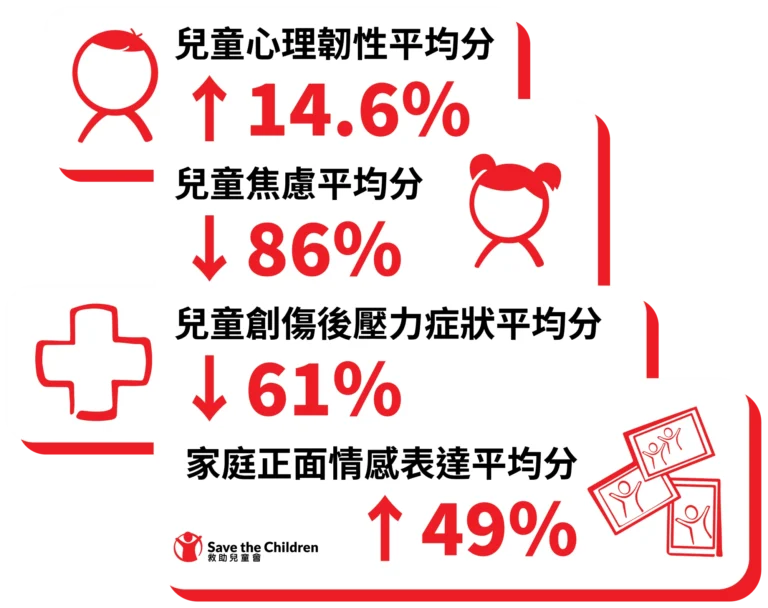
- Lower anxiety: In the Play Therapy group, the mean Generalised Anxiety Disorder-7 score decreased from 7.00 to 1.00, a reduction of 86%;
- Greater resilience: In the Expressive Arts Therapy group, the mean resilience score increased from 21.86 to 25.05, a rise of 14.6%;
- Lower post-traumatic stress symptoms (PTSD): In the Play Therapy group, the mean post-traumatic stress symptom score decreased from 10.5 to 7.23, a reduction of 31.14%. In the Expressive Arts Therapy group, the mean score decreased from 23.52 to 9.13, a reduction of 61%.
- More positive family emotional expression: The mean score in the Expressive Arts Therapy group increased by 49.19%, from 1.61 to 2.40.
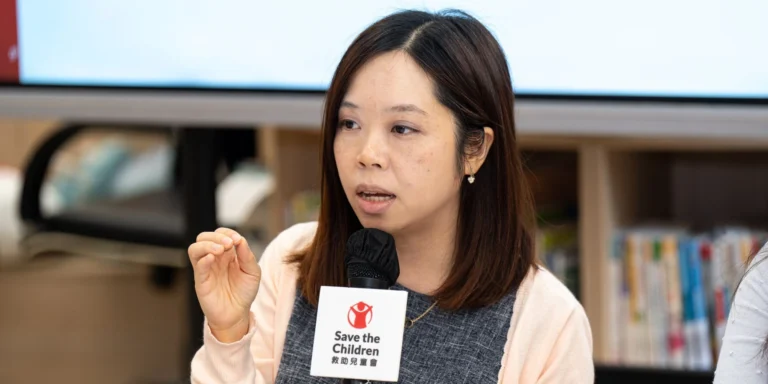
Dr Bess Yin-Hung Lam, Associate Professor and Associate Head of the Department of Counselling and Psychology at Hong Kong Shue Yan University, said: “The initial findings indicate that play and expressive arts offer age-appropriate and accessible ways for children to process their feelings, regulate their emotions and build coping skills. The study also recorded improvements in children’s emotional wellbeing, behaviour, attention and peer relationships, alongside increased positive family expression. These findings suggest that children’s recovery and continued development require support from caregivers, schools and the environments they encounter in their everyday lives.”
Pupils Express Their Feelings Through Art and Apply Their Learning in Daily Life
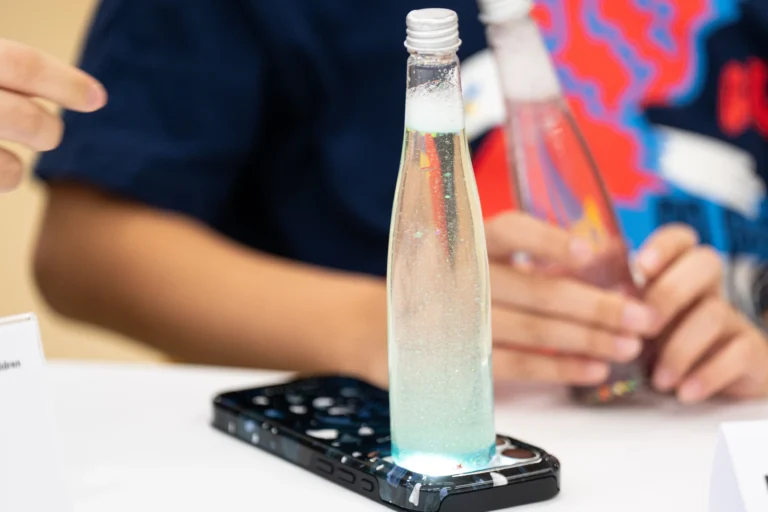
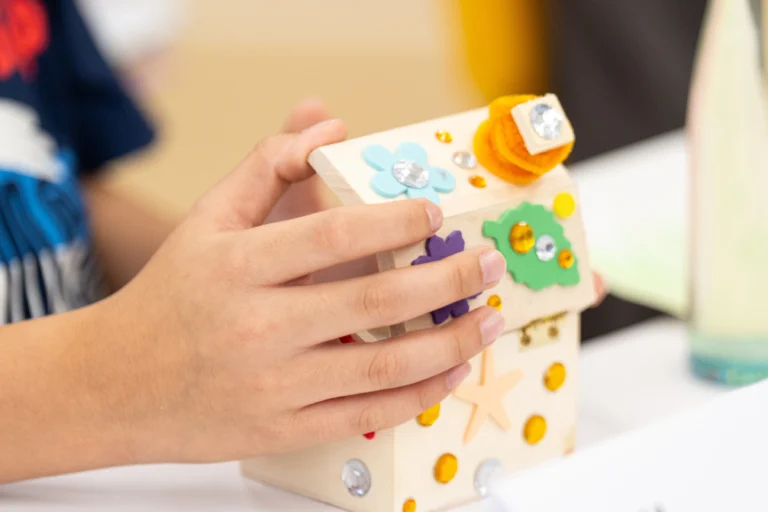
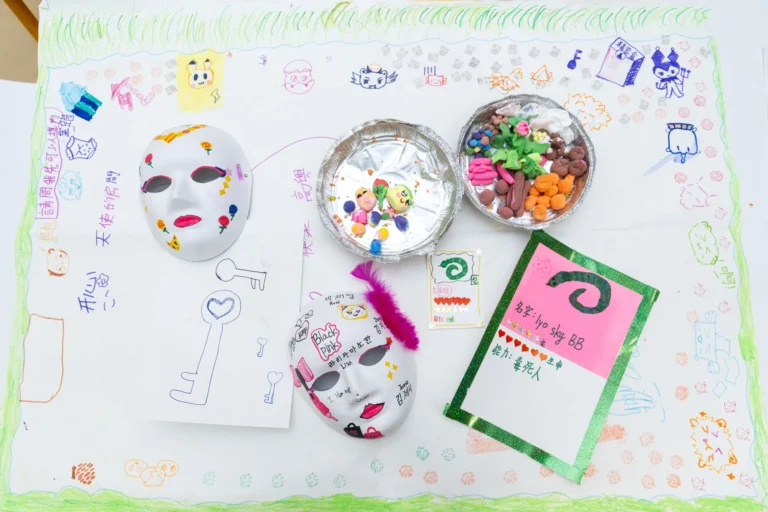
Tai Po Baptist Public School is one of the schools participating in Save the Children Hong Kong’s Play Therapy and Expressive Arts Therapy programmes. Through play, painting, music and other creative media, pupils learn to recognise and express their emotions at their own pace, progressively building a sense of security and trust. In a safe environment, registered therapists guide pupils in identifying emotional-regulation and self-soothing techniques that suit their individual needs, strengthening their ability to cope with adversity and stress.
Following the blaze, Jackey*, now a Primary Six pupil, needed time to adjust to changes in his living circumstances and daily life. At first, he rarely expressed his feelings and found it difficult to sustain his attention for extended periods. After taking part in Expressive Arts Therapy, he gradually learnt to recognise and express his emotions. He also began using techniques introduced during the activities to regulate his emotions, calm himself and re-engage in the sessions. When he saw a peer feeling upset, he offered the pupil a tissue and stayed by their side, demonstrating empathy and an ability to connect with others. These changes not only responded to his immediate emotional needs, but also helped him progressively build self-awareness, emotional expression, and help-seeking skills, laying a foundation for navigating future challenges and transitions as he grows.
Bringing Support into Families and Schools to Create Environments that Enable Children to Grow
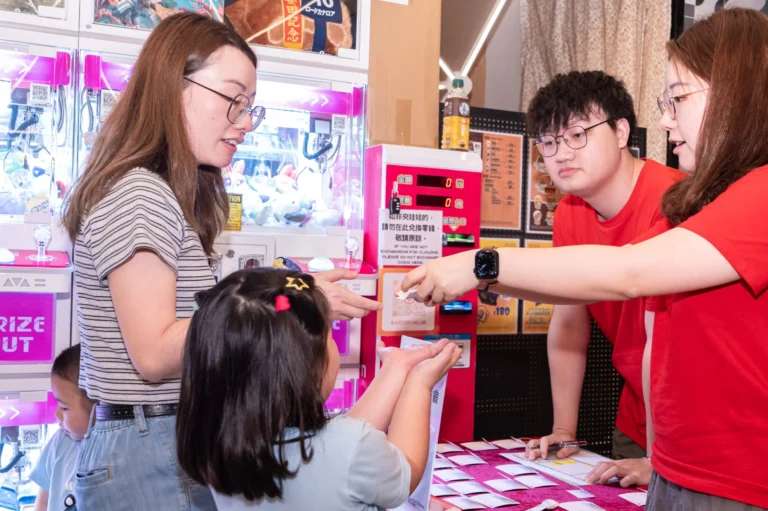
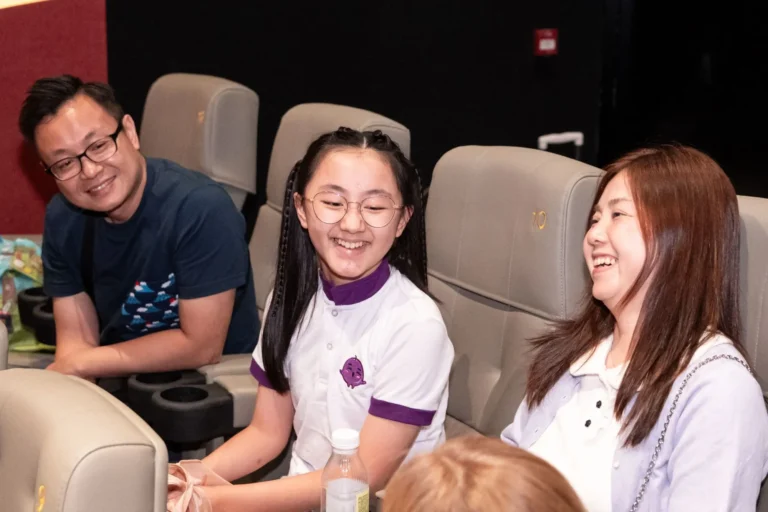
Save the Children Hong Kong adopts a child-centred approach, extending services beyond individual children to their families, schools and communities to respond to children’s different needs throughout the recovery process. At the child level, Play Therapy and Expressive Arts Therapy help children express their feelings and build resilience. At the family level, workshops for parents, parent-child activities and other forms of support help caregivers manage stress, strengthen parent-child communication and deepen their understanding of children’s needs. At the school level, psychoeducation sessions and teacher workshops help teachers understand the different reactions children may show following a major incident, identify needs early and connect pupils with further support when appropriate. Stress-reduction and self-care workshops also help teachers recognise early warning signs of stress, fatigue and burnout.
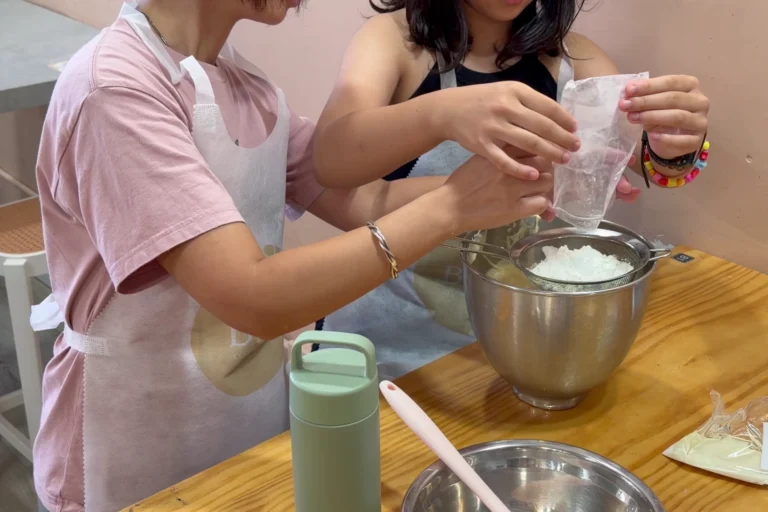
Wong Shek Hung added: “Recovery is not only about easing disaster-related anxiety. It is also about helping children believe in their ability to continue learning and developing, adapt to change and face the challenges of growing up. We hope to draw on Save the Children’s more than a century of international humanitarian and post-disaster recovery experience, and work alongside the Government, schools, social welfare organisations and families to support children. No child should have to face difficulties alone. With the right support, they can continue exploring their interests, realising their potential and moving towards the future with hope.”
Save the Children Hong Kong recommends that the Government incorporate trauma-informed principles into policies for responding to and recovering from major incidents. Support should extend beyond immediate post-disaster educational and material assistance to medium- and long-term recovery, with the psychosocial needs of children and families integrated into overall planning. A child-centred psychosocial support mechanism should also be established. Schools, professional teams and community partners should work together to maintain contact with and provide continued support to affected children and families. This should include early assessment and ongoing follow-up for affected children and families, support for caregivers and teachers, stronger school-based services, and age-appropriate, diverse, non-stigmatising and community-based interventions. Save the Children Hong Kong will continue to provide school-based trauma-informed interventions, support for parents and teachers, parent-child and family activities, and Child-Friendly Safe Spaces in Tai Po, offering sustained support that responds to the needs of children and families at different stages of recovery.
* Pseudonyms have been used to protect the child’s identity.