
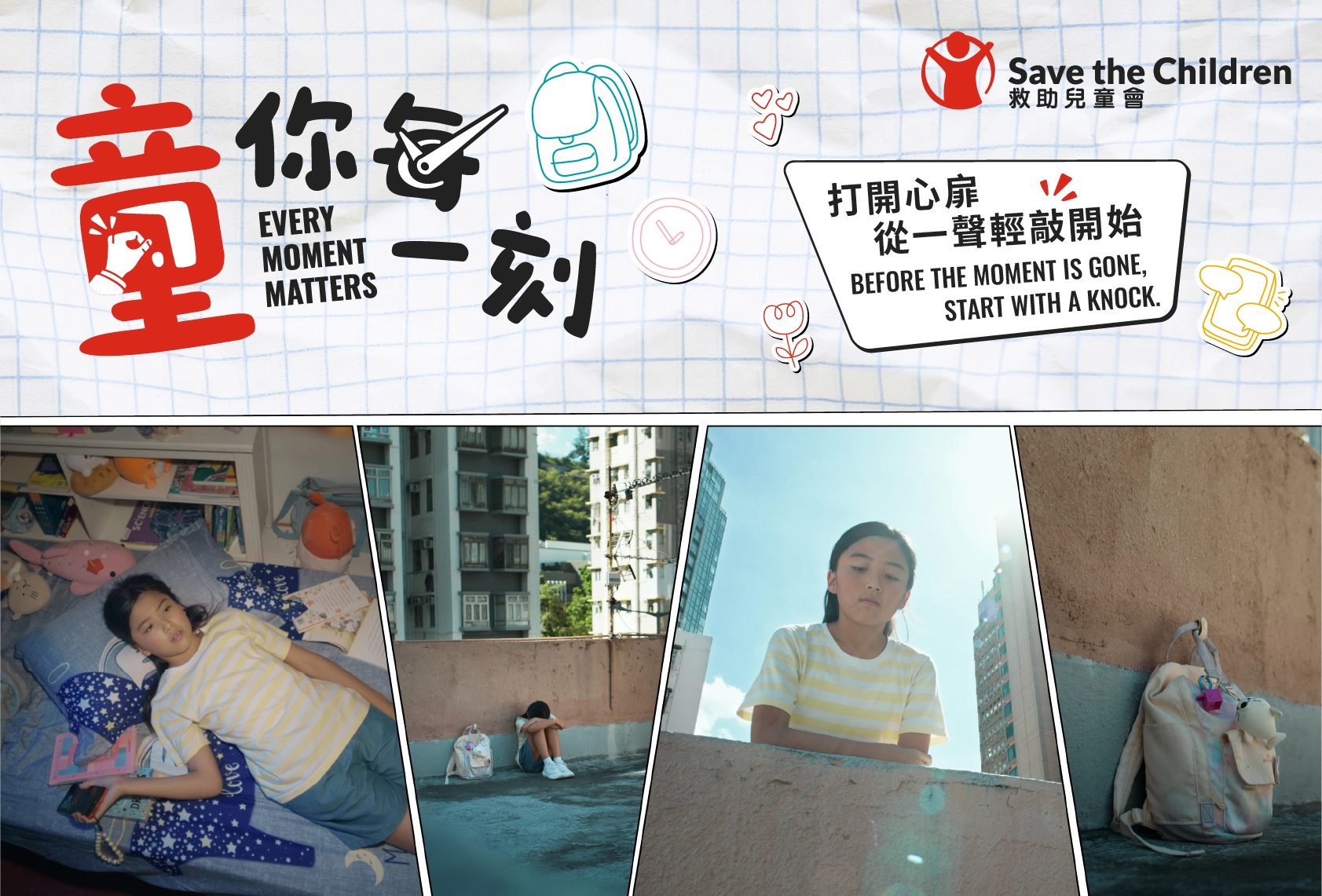
After the long summer holiday, children need to readjust to structured routines, academic demands, social relationships and family expectations. For some children, returning to school is not simply about “getting back to normal”, but about facing sources of pressure again. This stress may not appear through crying, pleas for help or school refusal. Instead, it may be hidden in silence, withdrawal, emotional changes, physical discomfort or other everyday details.
In the first phase of Save the Children Hong Kong’s public awareness campaign, Every Moment Matters, the organisation is calling on the public to pay closer attention to students’ mental health during the back-to-school period. Save the Children Hong Kong has also invited Dr CHAN Kwok Ling Phyllis, Adviser to Save the Children Hong Kong and Specialist in Psychiatry, to share her professional insights.

Every Moment Matters calls for attention to students’ mental health as the new school year begins.
Back-to-school stress: Nine warning signs that are easily overlooked
Dr Phyllis Chan, Adviser to Save the Children Hong Kong and Specialist in Psychiatry, said children at different stages of development may experience and express back-to-school stress in different ways. If a child frequently complains of physical discomfort when school is mentioned or before going to school, parents should not immediately dismiss this as lazy or making excuses. Instead, they should first seek to understand whether the child is experiencing emotional distress or difficulty adjusting.
Kindergarten children may feel anxious about being separated from their primary caregivers and adapting to an unfamiliar environment. Primary school children need to adjust to a new learning model, academic demands, teachers and classmates. Secondary school students may need to adapt to a great number of subjects and teachers, rebuild their friendship circles and cope with academic pressure and peer comparisons. Even when students continue to attend school as usual, silence, withdrawal, self-doubt and declining concentration may indicate that they are struggling to adjust.
Dr Chan said, “Preparing for the new school year should not focus only on practical items such as textbooks and uniforms. Children also need to be emotionally prepared. Just because a child has not said that they do not want to go to school does not mean they are not under pressure. Some children may not know how to express their emotions in words. Their distress may be hidden in silence, behavioural changes or physical discomfort.”
Dr Chan advised parents and caregivers to watch for the following changes:
- Becoming quieter than usual and interacting less with family or friends;
- Suddenly becoming withdrawn, frequently spending time alone or remaining in their room for long periods;
- Becoming easily irritated, tearful or restless, or reacting strongly to minor issues;
- Frequently complaining of headaches, stomach aches, dizziness or tiredness without an apparent physical cause;
- Noticeable changes in sleep or appetite;
- Losing interest in activities they previously enjoyed;
- Delaying or resisting going to school, or avoiding conversations about school;
- A sudden decline in concentration or academic performance; and
- Frequently making negative remarks such as “I can’t do it”, “I’m so tired” or “It doesn’t matter”.
Dr Chan explained that these signs do not necessarily mean a child has a mental health condition. However, if the changes persist, become more severe or begin to affect the child’s learning, sleep, diet, relationships or daily life, caregivers should pay closer attention and consider whether further support is needed.

Packing your child’s “emotional school bag”: Five practical tips for parents
Dr Chan added, “Adjusting to the new school year is not a sprint. Parents should give their children time and space. In addition to asking about their academic progress, parents can ask whether they are settling in, whether they feel safe and whether they need someone to listen. For a child, feeling seen and heard can be an important first step.”
|
Watch for hidden signals |
Parents can observe whether their child is persistently having difficulty sleeping, experiencing changes in appetite, losing interest in activities they previously enjoyed or becoming more dependent on them than usual. |
|
Adjust gradually before school starts |
Parents can begin adjusting their child’s sleeping, waking, mealtime and activity schedules two to three weeks before school starts, gradually helping them return to the rhythm of a typical school day. |
|
Ask open–ended questions |
Instead of immediately asking about homework and marks after school, parents could ask: “Did you play with any classmates today?”, “What did you do during recess?” or “Which subject did you find most interesting today?” This helps children feel that their parents care about their experiences and feelings, not only their academic results. |
|
Validate emotions without judgment |
When a child expresses worry, parents can give them time to talk before deciding whether advice is needed. They should avoid immediately responding with remarks such as “What is there to be afraid of?”, “Everyone goes through the same thing” or “You’re overthinking it”. |
|
Seek professional help when appropriate |
If a child’s anxiety persists for a month or more and affects their learning or daily life, parents should seek assistance from a school social worker, counsellor or appropriate professional. |
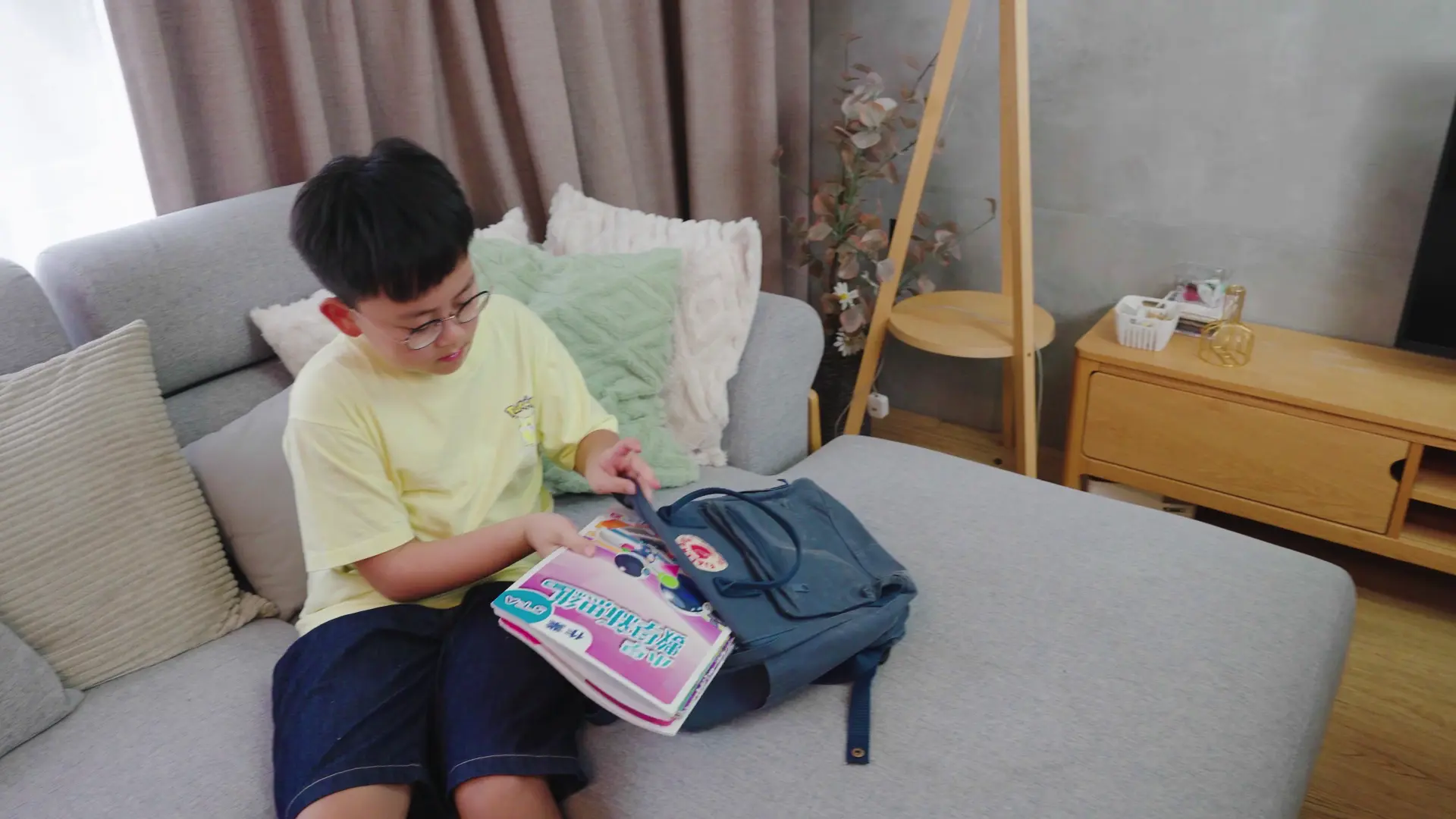
Preparing for school also means paying attention to children’s feelings.
A parent’s experience: Helping a child prepare for school through everyday support
May, a participant in Save the Children Hong Kong’s Heart to Heart Parent-Child Programme, which promotes positive parenting, said that her son, Lam Lam, will soon begin Primary 2. Although he has not shown strong resistance to returning to school, she has noticed that he is reluctant to complete his summer homework. She also believes that he may feel uneasy about meeting a new teacher and seeing classmates whom he has not seen for some time. Before the new school year begins, May plans to help Lam Lam gradually readjust to his daily routine. She will set aside time for reading while also leaving room for him to visit relatives, play and take part in activities he enjoys, helping him relax.
May said, “Moving up a year does not mean that a child can suddenly adjust to everything. Every child has different abilities and develops at their own pace. I will continue to observe his emotions and behaviour, listen to his thoughts and give him time to adjust gradually.”
Child-facing organisations can also respond early to students’ emotional needs
In addition to parents and caregivers, schools, social welfare organisations, summer activity centres and other child-facing organisations have more opportunities to interact with children before the new school year begins. This may enable them to notice emotional and behavioural changes that parents may not immediately observe.
Save the Children Hong Kong has developed five practical Back-to-School Countdown tips to help frontline staff respond to children’s needs during everyday activities.
|
Provide consistent communication guidance |
Organisations can remind frontline staff to be mindful of how they talk about returning to school, and provide simple communication guidance and sample responses. Staff should avoid repeatedly asking children, “Have you finished all your homework?” or “Are you ready to go back to school?” Instead, they can help children reflect on positive summer experiences, new skills they have acquired and their personal growth. |
|
Review and adjust activity arrangements |
Child-facing organisations can review the flow and content of activities before the new school year, taking into account the nature of each activity. They can reduce overly stimulating or competitive elements where appropriate, incorporate more relaxing, collaborative or flexible components, and allow sufficient time for rest and adjustment. For example, during football training, coaches can reduce matches focused on winning or rankings and instead organise relaxed games, cooperative challenges or small-group activities. Coaches can also recognise children’s effort, teamwork and progress, helping them build confidence and a sense of achievement. |
|
Watch for sudden behavioural changes |
Frontline staff can watch for sudden behavioural changes before the new school year, including:
|
|
Make use of opportunities to “talk while playing” |
When children naturally mention worries about returning to school during an activity, for example, “It’s so frustrating. I have to go back to school next week”, staff do not need to offer a solution immediately. They can first listen and acknowledge the child’s emotions by saying, “It sounds like you’re a little worried. Which part is troubling you most?” |
|
Use a “praise first, then express concern” approach with parents |
Frontline staff can use drop-off and pick-up times to speak with parents, first sharing the child’s positive behaviour that day before explaining any emotional or behavioural changes they have observed and encouraging parents to pay closer attention. Staff should also be aware of whether the child is present during the conversation, to avoid making the child feel that the staff are “telling on them”. |

Child-facing organisations can adjust activities to support children before school resumes.
The mental health of children and young people has become an increasing concern in recent years. According to the Department of Health’s Annual Health Report of the Student Health Service, during the 2024/25 academic year, 6,848 students (1.6%) reported having planned to commit suicide, and nearly 3,000 students (0.7%) reported having made a suicide attempt. Meanwhile, our latest research “Hearing Children” reveals that when experiencing emotional distress, youths are reluctant to seek help from adults (including teachers, school social workers, and parents). The findings highlight the need for parents and caregivers to take a more active role in supporting the mental health of children and young people, and to provide appropriate support at an early stage.
Notes to Editors
Save the Children Hong Kong will roll out a series of public education and support resources under the Every Moment Matters campaign, including: