
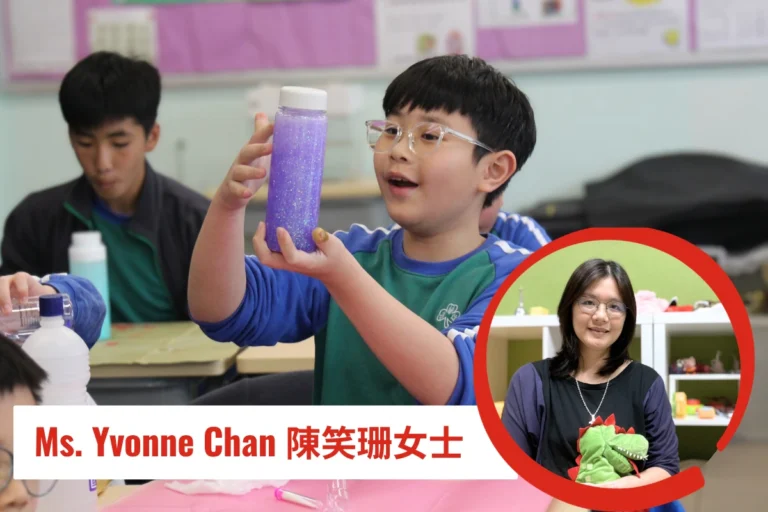
By CHAN Siu Shan Yvonne, Lecturer, Department of Counselling and Psychology, Hong Kong Shue Yan University
The first month of the school year can bring big feelings. Some children are happy to see old friends. Others feel anxious about new routines, new teachers, or new challenges. Some children cope on their own. Others show stress through their emotions or behaviour. As a parent, you may notice these signs:
- Your child suddenly becomes quiet, even though they used to be talkative.
- They become demanding or controlling at home.
- They refuse to get up, put on their uniform, leave the house, or enter school.
- They have nightmares or become more emotional than usual.
- They show “baby” behaviours again, such as clinging, whining, bedwetting, or asking for help with things they can already do.
- They become aggressive at night, refuse to sleep, or eat very little.
If you see any of these signs, try a simple tool: special play time with your child.
What is special play time?
Special play time is a regular, one-on-one play session between you and your child. It can be as short as 30 minutes once a week. You do not need to be a therapist or use fancy toys. You just need to give your child your full attention and let them lead.
Why play?
Young children often cannot explain their feelings with words. Play is their natural language. As the pioneer in the field of Child Centered Play Therapy Dr. Garry Landreth says, “Birds fly, Fish swim, and Children play.” Through play, children can express feelings, work through worries, and feel understood.
Special play time can help your child:
- Release stress and difficult emotions.
- Feel safe, accepted, and supported.
- Learn to manage emotions and become more responsible.
- Feel closer to you and trust you more.
How to set up special play time?
Choose simple, safe, open-ended toys. Options include:
- Dolls, family figures, animal figures, and puppets
- Toy food, doctor kits, cars and blocks
- Crayons, paper, playdough, and clay
- Foam swords, soft balls, and simple games
Avoid electronic toys, fragile or expensive items, sharp objects, and games with too many rules.
Your role during special play time
Let your child choose what to play and how to play. Your role is to follow, not to lead or teach. Try to avoid asking questions, naming a toy before your child names it, praising, such as “Good job!”, or judging, such as “That’s not how to do it”.
Instead, use your eyes to see, your ears to listen, and your heart to understand. Then respond in these helpful ways:
- Track behaviour – Say what you see your child doing.
Example: “You’re stacking the blocks.” - Reflect feelings – Name the feeling you notice.
Example: “You feel frustrated because it fell.” - Reflect play content – Describe what your child is playing.
Example: “The car is driving to the house.” - Return responsibility – When your child asks you to solve a problem, gently hand it back.
Example: “In this special time, you can decide.” - Set simple limits – Only step in if your child might hurt themselves, hurt you, or damage toys. Be brief and consistent.
Example: “I know you want to play this way, but throwing the block at me is not right. You can throw it into the basket or onto the floor.” - Encouragement: During play, reflect your child’s abilities and positive personal qualities.
Example: “Stacking these blocks isn’t easy. I saw you didn’t give up. You kept trying different ways until you finished!” - Join when invited – If your child asks you to play a role, join in and follow their direction.
Why these responses help
When you follow your child’s lead without judging, your child feels:
- Safe – They learn that all feelings are okay.
- Understood – You notice and name their feelings.
- Empowered – They make their own choices.
- Closer to you – You show you are truly interested in them.
Over time, these feelings help children manage stress, become more confident, and open to you.
An example: Mary’s changes after the special play time
Mary started feeling stressed two weeks after school began. Her teacher checked homework every morning in a serious tone, and Mary worried about making mistakes. At home, she kept asking her mother what to do and cried easily when doing homework.
Mary’s mother arranged a special play time. Mary chose building blocks. She kept asking, “How should I build it?” Instead of giving instructions, her mother stayed calm and said:
“You chose to play with the blocks.”
“You’re not sure how to play. In this special time, you can decide.”
“You feel unsure and worried.”
Mary felt safe because her mother understood her without judging. She began building blocks by rainbow colours. When the tower fell, Mary felt frustrated and started to play with something else. Her mother said, “You felt frustrated. You chose to play something else.”
Mary learned that it was okay to feel frustrated and okay to stop and try again later. Later, she built a tower on her own. Her mother reflected, “You feel proud and excited.” Mary felt empowered because she had done it herself.
After several special play times, Mary started sharing more about school and her feelings with mother. She trusted that her mother would listen without judgment, would accept and support her choices, would trust she can overcome challenges. Her stress gradually decreased.
Two extra games for parents
If you would like more ways to play with your child, here are two games to try.
Game 1: Roll a Boat (Ages 3–5)
Sit on the floor. Have your child sit on your legs, as if riding a boat. Pretend to buckle up. Sing “Row, Row, Row Your Boat” together. Hold your child and sway left and right. Sing fast and sway fast. Sing slowly and sway slowly. Enjoy the boat-rolling time.
Gentle touch and movement help your child feel nurtured. They also practise holding on and balancing, while you enjoy doing something together.
Game 2: Follow Me (Ages 6–8)
Materials: Paper and coloured pencils
Put a piece of paper on the table. You and your child take turns being the leader. The leader draws anything for about 30 seconds while the other person follows along on the same paper. Then switch. Continue for about 5 minutes. No comments or judgments about the drawing, just enjoy the time together.
This game helps you tune in to your child’s world and feelings. If your child seems anxious or restless, draw slowly and breathe slowly. Your calm pace can help your child slow down too.
A final note
Parents, you do not need to be perfect. You just need to be present. A little special play time can help your child feel safe, understood, and connected. Start small, 30 minutes once a week is enough.
If your child’s stress continues or feels overwhelming, please reach out to a school counsellor or child health professional.
References:
Landreth, G. (2024). Play therapy: The art of the relationship (4th ed.). Routledge.
Landreth, G. L., & Bratton, S. (2020). Child-parent relationship therapy (CPRT): An evidence based 10-session filial therapy model (2nd Edition). Routledge.