
The school season is upon us again. Parents are busy preparing new backpacks, uniforms, and stationery for their children, but one equally important item is often overlooked—the child’s emotional “school bag.” As a specialist in psychiatry, I want to remind parents: the start of school is not just a matter of physical preparation, but also a mental and emotional “readiness.”
Children’s Stress Doesn’t Always Show in Words
Many parents ask, “My child has never said they don’t want to go to school, so they’re not stressed, right?” In fact, back‑to‑school stress does not always appear as crying or pleas for help. Many children do not directly express their stress; their distress often hides in silence, behavioural changes, or everyday details.
Kindergarten: The Little Hands That Cry and Refuse to Change Uniforms
Let’s start with the youngest ones. Two‑and‑a‑half‑year‑old Lok Lok (pseudonym) started nursery class for the first time, leaving his mother to face an unfamiliar school environment and new faces for the first time. Excessive negative emotions triggered anxiety about going to school—he even refused to change into his uniform and cried in class because he missed his mother. The intense anxiety also affected his daily life: he had frequent nightmares and refused to eat or became picky with food.
This is a classic case of separation anxiety. The source of anxiety for kindergarten children usually stems from adapting to an unfamiliar environment and separating from their primary caregiver. However, children’s reactions to separation vary greatly, and this is closely related to their “attachment” relationship with the caregiver. In developmental psychology, the attachment patterns between children and their primary caregivers are broadly divided into four types, each showing distinctly different behaviours at the start of school:
- Secure attachment (about 60‑70%):These children have an inner belief that “Mum will come back.” Even if they feel uneasy during a brief separation, they can be soothed quickly andengage in activities with the teacher’s guidance. They are usually willing to explore new environments and adapt relatively smoothly to school. Traits: emotionally stable, able to express needs, appropriately cautious with strangers but not overly fearful.
- Anxious attachment (about 15‑20%):These children are extremely afraid of being abandoned and are overly sensitive to their caregiver’s whereabouts. At school, they often cry loudly and cling to their mother; even after she leaves, they are hard to calm down and repeatedly ask, “When is Mum coming?” Traits: clingy, panic‑stricken during separation, angry or ambivalent upon reunion, often worrying that the caregiverwon’t come back.
- Avoidant attachment (about 10‑15%):These children appear seemingly “independent”—theydon’t cry or make a fuss, and even seem indifferent to their mother’s departure. But underneath, their stress is latent. They may refuse the teacher’s comfort, withdraw into a corner to play alone, or show regressive behaviours (such as thumb‑sucking or bed‑wetting). Traits: suppressing emotions, not actively seeking comfort, showing little reaction to the caregiver’s leaving or returning, yet their heart rate and stress hormones indicate they are actually very tense inside.
- Disorganised attachment (about 5%):These children show the most puzzling behaviour—sometimes rushing to their mother, sometimes pushing her away; during separation they may freeze or rock back and forth, displaying contradictory or repetitive movements. This is often linked to the caregiver’s own emotional instability or traumatic experiences. At school, they may both want to approach the teacher and be afraid of her, making adaptation the most difficult.
Before school starts, parents can quietly observe the interaction pattern between themselves and their child. If your child is of the anxious type, give more reassurance and clear promises (e.g., “Mum will pick you up after lunch”), and practise brief separations repeatedly. If your child is avoidant, do not take their lack of crying lightly; instead, take the initiative to hug them and use picture books to guide them to express their feelings. For disorganised children, it is advisable to seek professional counselling and establish a stable, predictable daily routine. Regardless of the type, the key is to help the child build the secure belief that “separation will always be followed by reunion.”
In practical terms, parents can try short separation exercises before formal school starts, for example, telling the child: “Mummy and Daddy are going downstairs to buy you some fruit, and we’ll come right back.” This helps the child gradually internalise the idea. Teachers can also support this by gently repeating “Mummy will come back” when the child is upset, rather than changing the subject, which helps reinforce the foundation of secure attachment.
Primary School: The First‑Grader Who Complains of Tummy Aches Every Day
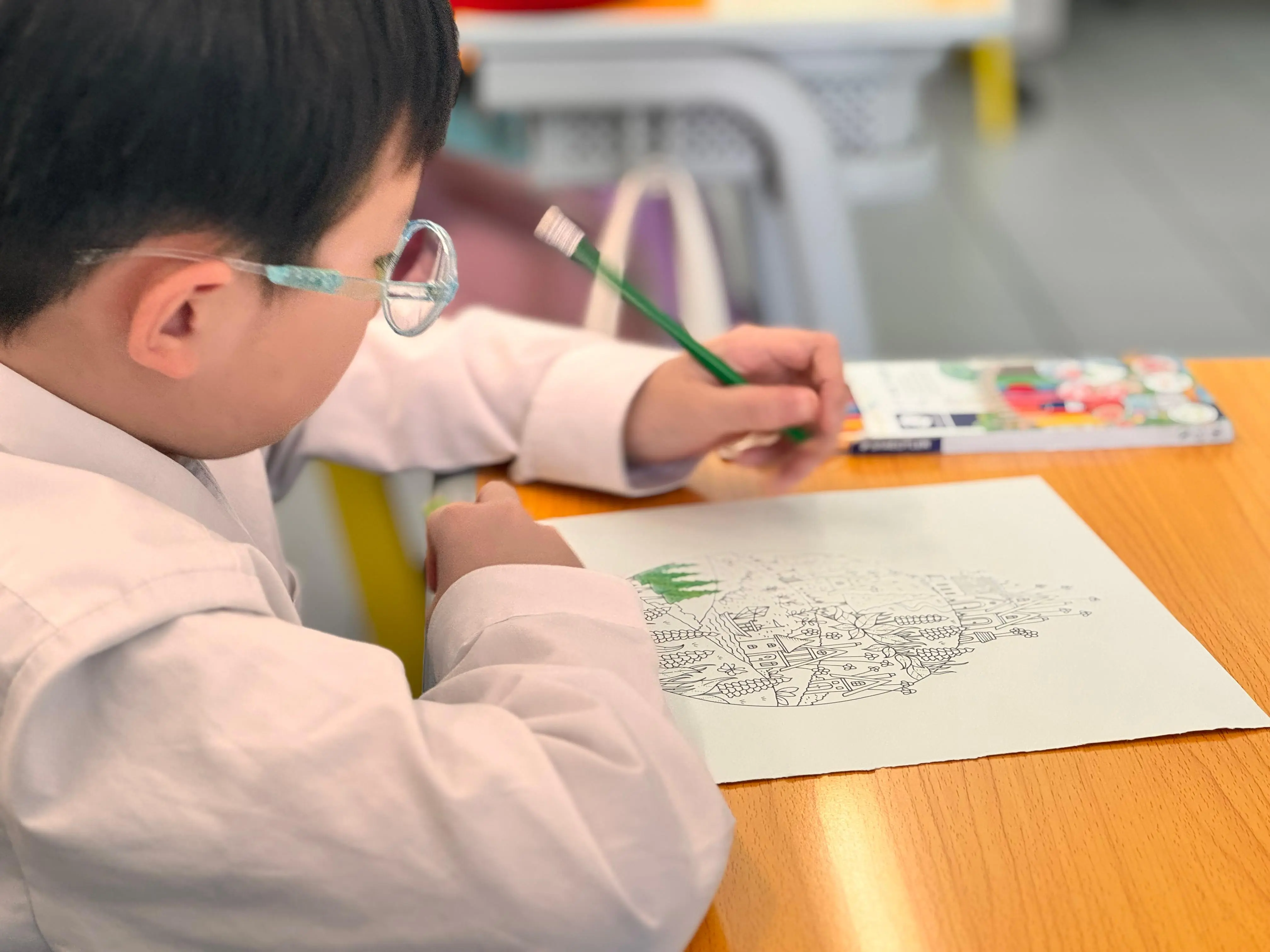
Moving up to primary school, the sources of stress become more complex. A five‑ or six‑year‑old girl starting Primary 1 faces a completely new learning model. Emotionally, she shows signs of depression, crying, and excessive worry; physically, she experiences headaches and gastrointestinal discomfort; behaviourally, she is easily distracted and overly self‑critical. She once told her parents she didn’t want to go back to school.
Primary school children often express stress through physical symptoms. If parents notice that their child repeatedly complains of unexplained headaches, dizziness, stomach aches, or nausea whenever school is mentioned—or even expresses fear of going to school—they should seek advice from school social workers or professionals, rather than simply dismissing the child as lazy or making excuses. At the start of term, children have to adjust to a new environment, new classmates, new teachers, and an increased academic load; all these unfamiliar situations can heighten anxiety. These pressures may manifest physically, such as vomiting, abdominal pain, or insomnia.
Secondary School: Form 1—The Hidden Stress of Transition
If kindergarten and primary school anxiety is about “leaving Mum,” then Form 1 anxiety is about “leaving the familiar self.” Thirteen‑year‑old Lok Yee (pseudonym) was a prefect in primary school, with excellent grades, and successfully gained admission to a Band 1 English‑medium secondary school in her district. In the first week of school, she got up on time every day, put on her uniform, and went to school quietly. Her mother was secretly relieved that her daughter seemed to be adjusting well. However, starting from the second week, Lok Yee began to complain of “headaches,” refused breakfast, locked herself in her room after school, and no longer chattered animatedly about her school day as she used to. When her mother asked about her grades, she coldly replied, “Nothing to say.”
It wasn’t until the class teacher called to say that Lok Yee often stared blankly in class and had performed poorly in quizzes that her mother realised something was wrong. Later, in the counselling room, Lok Yee finally cried, “All the textbooks are in English, and I can’t understand a lot of it. But I’m too afraid to raise my hand and ask, because I don’t want my classmates to think I’m stupid. In primary school, the teacher would always help me proactively, but now I have to take the initiative myself, and I don’t know how.”
This is the typical face of Form 1 back‑to‑school anxiety—it doesn’t necessarily come out as crying or school refusal; it hides in silence, withdrawal, and physical discomfort. The transition to secondary school brings multiple shocks: moving from one school to a completely unfamiliar campus, from a few teachers to many subject teachers, and from a close‑knit group to having to rebuild friendships in a larger community. Meanwhile, hormonal changes during puberty make emotions more sensitive. Added to this is the peer comparison pressure that comes with the “Band 1” label—many students who were “top” in primary school suddenly find they are no longer the most outstanding, and that sense of loss can easily evolve into anxiety and self‑doubt.
What parents most need to do during this transitional period is not to rush into asking “What score did you get?” but to first care about “Did you make any new friends today?” or “Which subject did you find most interesting?” Give your child more space to adapt, allow fluctuations in grades during the first few months, and proactively keep in touch with the school counsellor. If the child continues to show insomnia, loss of appetite, low mood, or strong resistance to going to school, it is time to consider seeking professional assessment. Remember, adjusting to secondary school is not a sprint; it’s a marathon that requires patience and companionship.
How to Pack Your Child’s Emotional School Bag?
Below are a few points that I hope will help parents better support their children:
- Watch for hidden signals:When children are emotionally distressed, they may not be able to express it verbally at first. Parents canobserve daily life—are they persistently having trouble falling asleep? Is their appetite consistently affected? Have they lost interest in things they used to enjoy? Are they overly dependent on parents?
- Adjust gradually before school starts:The relaxed summer schedule may make it hard for children to adapt at the beginning of term. Parents can start adjusting the daily routine two to three weeks before school, gradually reintroducing the rhythm of school days.
- Ask open‑ended questions: Avoid immediately pressing for homework or grades right after school. Instead, ask: “Did you play with any classmates today? What did you do during recess?” This lets your child feel that you care about “them as a person,” not just “their marks.”
- Validateemotions without judgment: Create space to listen to your child’s worries. Let them express their feelings first before giving advice, so they feel emotionally accepted. Avoid a lecturing tone when communicating with children who are experiencing emotional difficulties.
- Seek professional help whenappropriate:If anxiety persists for a month or more and affects learning and daily life, it is time to seek assistance. With early detection and appropriate intervention, the vast majority of mental health conditions can have very good outcomes.
The start of school is not only a new beginning for children, but also a new challenge for parents. Let us prepare not just the textbooks in the school bag, but also a sense of emotional security for our children—becoming the support and foundation they need most.