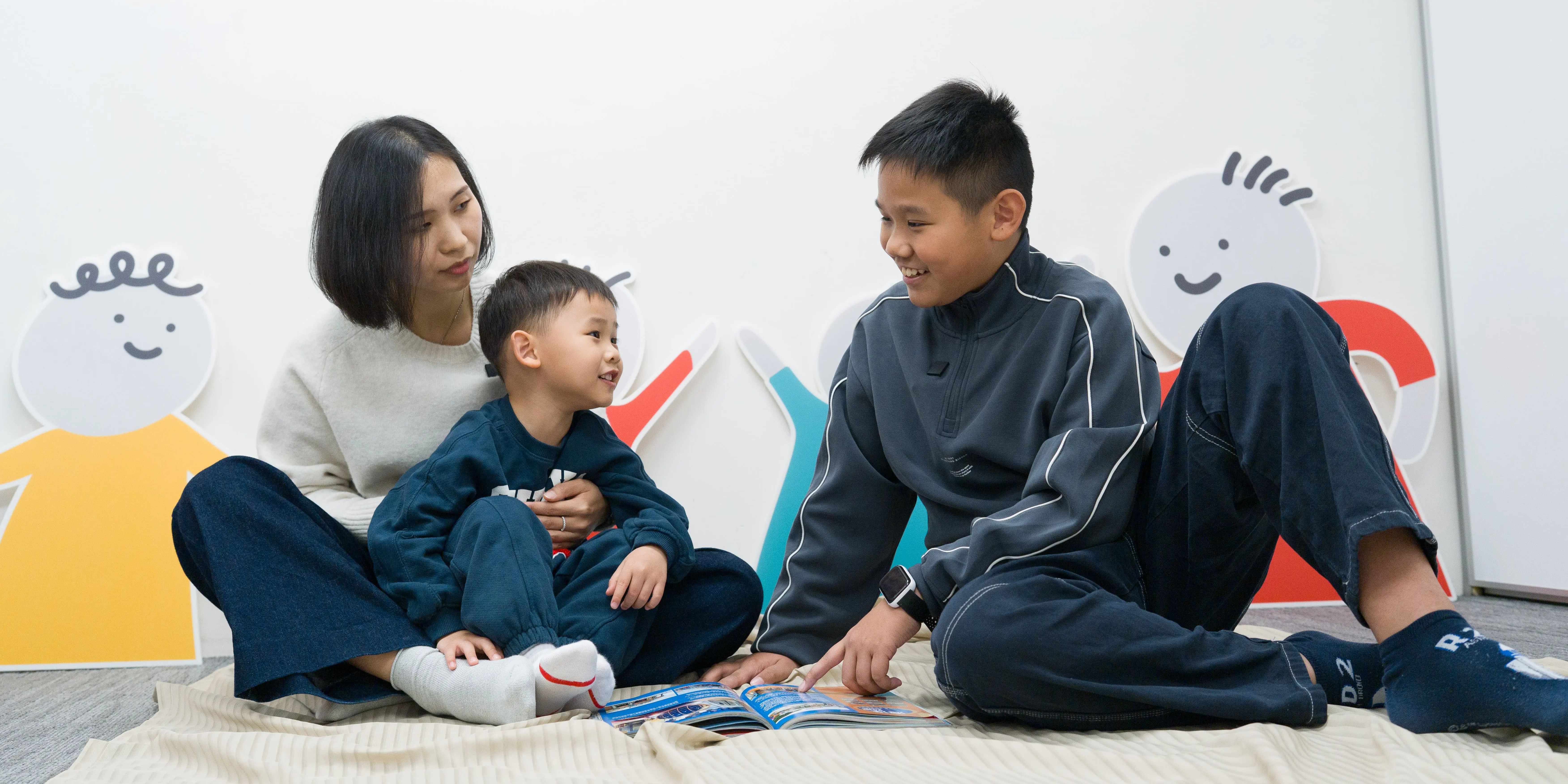
Save the Children Hong Kong is committed to promoting children’s mental health through its Healing Heart and Mind programme. By integrating expressive arts with social-emotional learning, the programme helps children strengthen self-awareness and emotional regulation while learning to build healthy relationships, making emotional education an important part of supporting children as they grow.
Facing Growth Challenges and Pressures Together with Children
11-year-old Ivan is a Primary 6 student for whom academic performance is a primary source of stress. To better support him through the transition to secondary school, Ivan’s mother recently made the difficult decision to leave her job and become a stay-at-home parent. While grades can be improved with revision and practice, the stress and pent-up frustrations that build up along the way often need deeper support to resolve.
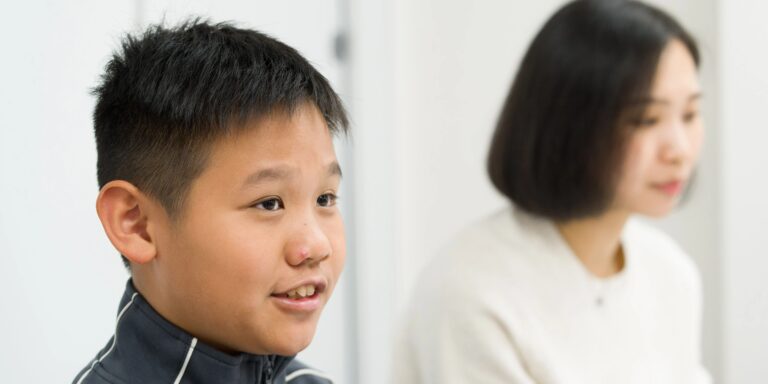
Ivan’s mother describes him as “a relatively optimistic child, but he has very high expectations for himself.” She recalls, “In the past, if his grades dropped even slightly, he would shut himself in his room and cry.” This perfectionist streak made Ivan’s emotions closely tied to results. Ivan adds, “If I didn’t do well in an exam, I would feel really disappointed in myself.”
As disappointment and anger accumulated, Ivan admits he didn’t know how to cope: “Before, whenever something didn’t go my way, I would immediately feel upset and angry. Sometimes those emotions would stay bottled up for three or four days before they faded.”
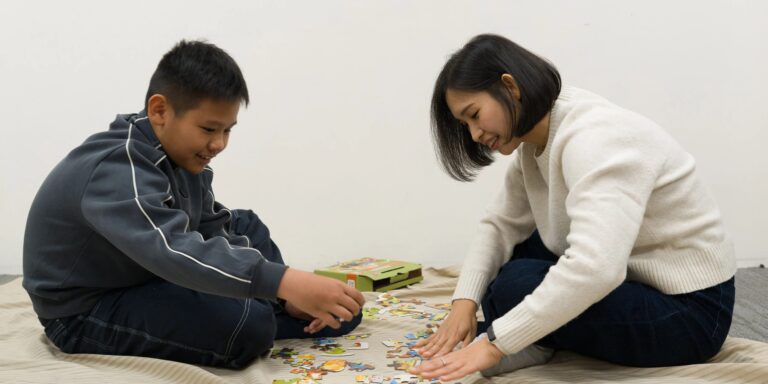
As an older brother, Ivan naturally loves his sibling and feels responsible for him. Yet when parents’ attention shifts, it is also normal for children to experience loss and jealousy. Ivan is vaguely aware of these mixed feelings: “Sometimes my brother gets new toys but won’t play with me. Or he’s allowed to do things I’m not… so I get angry — and a bit jealous.” When negative emotions stack up, they can easily spill over during difficult moments, affecting both Ivan’s personal growth and the family harmony.
Embracing the Value of Every Emotion and Building Connections with Others
Jennifer, the facilitator holding a Master’s degree in Counselling, has also undergone comprehensive theoretical and practical training specifically designed for “Healing Heart and Mind.” She has personally witnessed Ivan’s transformation throughout his two consecutive participations in the program. Jennifer emphasises that the programme is designed to help children understand that every emotion has value — and a reason behind it. She explains, “Ivan is naturally a very emotionally sensitive person with high expectations for himself. His perfectionist traits mean he could easily build up feelings of disappointment.
The Healing Heart and Mind programme integrates social-emotional learning into expressive arts. Across eight sessions, facilitators guide children to begin with self-exploration. In a safe and non-judgmental environment, children learn to explore their feelings, regulate emotions, and manage stress through creative works. Later, through collective creation, they build connections with fellow group members and learn the concept of interpersonal “boundaries.” This process goes beyond emotional release — it also lays a foundation for the children’s future learning, social relationships, and resilience.
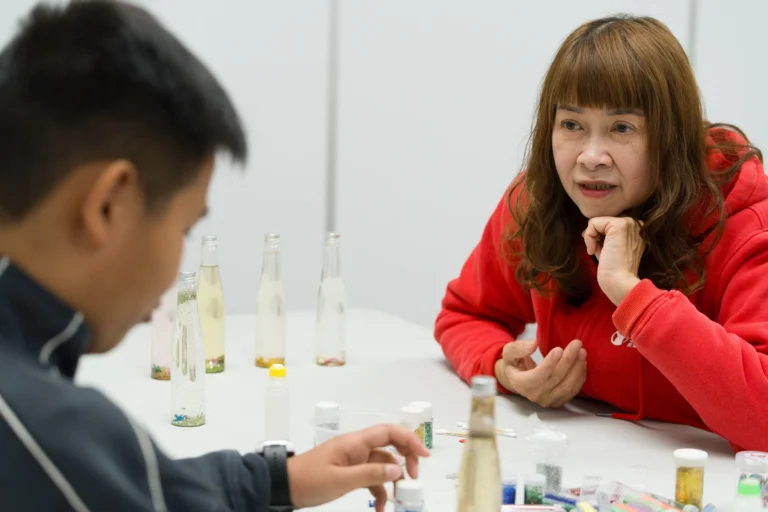
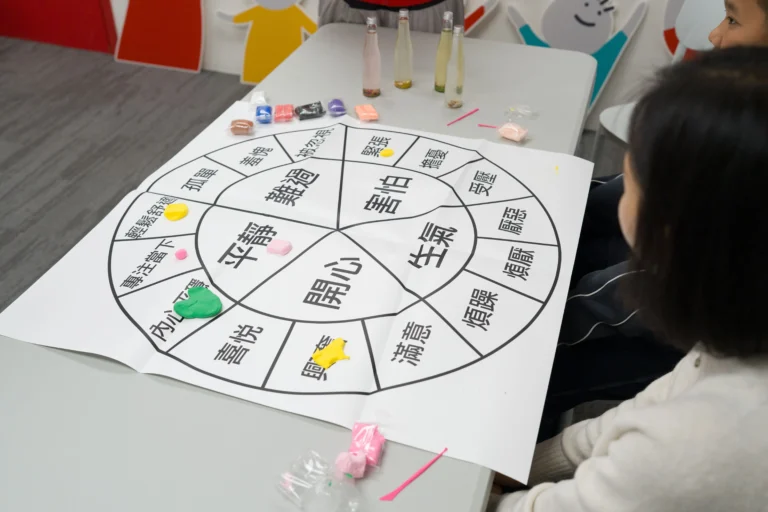
Through the process of creating these tools, children explore how to visualise and externalise abstract emotions that are otherwise difficult to express in words. This helps them identify and manage their feelings more effectively. Jennifer notes that as children grow into adolescence and face new people or challenges, these skills remain useful: “They help them handle disappointment, frustration, and other emotions.”
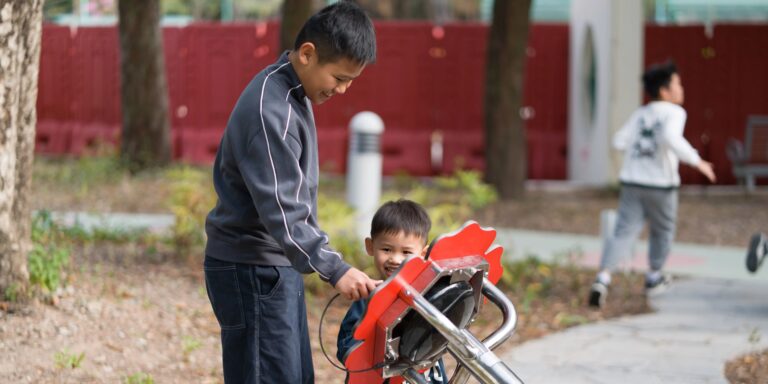
These milestones in personal growth have gradually manifested in family interactions: when Ivan is able to pause and steady himself as his emotions escalate, conflicts with his brother become much easier to de-escalate and repair. Ivan’s mother has also noticed that he is now “more mindful of his brother’s feelings”. Furthermore, when children learn to express their feelings clearly, parents are better able to hear the underlying needs behind those emotions, allowing them to respond in a more attuned and supportive way.
Understanding Emotions Without Judgment: Building a foundation for Mental Health
Jennifer describes emotions as having “no right or wrong, no good or bad.” The goal of Healing Heart and Mind has never been simply about “teaching children to behave”; rather, it helps them understand that behind every emotion is a reason that deserves to be understood. Emotions should be accepted and understood. When children are able to slowly organise and express their feelings in a safe environment — instead of being trapped alone in negative emotions like disappointment, anger, or jealousy — they gain a stronger sense of security as they grow. Parents, too, can learn alongside their children through the process of companionship. Jennifer describes this as “life literacy in emotional education”: teaching children that emotions are fluid — and, above all, can be accepted.
Ms Kalina Tsang, CEO of Save the Children Hong Kong, expressed her delight in witnessing Ivan’s growth. She also noted that the pressures children face often come from different areas of their lives and require continuous, appropriate support: “Academic performance, family relationships, peer interactions and the various changes that come with growing up can all affect children’s emotions. When children are unable to understand or express how they feel, disappointment and anger may gradually build up. Children need more than techniques that provide momentary relief. They also need a safe, non-judgmental space where their feelings can be seen, heard and understood. Healing Heart and Mind incorporates social-emotional learning into artistic creation and peer interaction, enabling children to explore and express their emotions in ways that work for them, while gradually developing the ability to regulate their emotions and cope with setbacks. These skills not only help them address immediate difficulties, but also lay a strong foundation for their future relationships, learning and development.”
Following Hurricane Katrina in the United States in 2005, Save the Children launched the “HEART” programme. Through expressive arts activities, the programme helps traumatised children express emotions that are difficult to put into words, rebuilding their emotional and social capacities. Save the Children’s expressive arts programmes have since expanded to 21 countries and regions worldwide, providing mental health support to children facing various hardships, including poverty, war, violence, natural disasters, and disease. Drawing on this international experience, Save the Children Hong Kong partnered with local expressive arts professionals to develop the Healing Heart and Mind programme. Delivered through expressive arts-based group sessions led by professionally trained facilitators, the programme encourages children to create freely — using art forms such as painting and music to share and process their personal experiences. This helps them recognise and manage their emotions, while cultivating empathy and the ability to understand others, ultimately assisting children in building healthy interpersonal relationships. Since the programme launched, we have served more than 30 schools and NGOs, conducted over 300 group sessions, and reached over 400 children.