
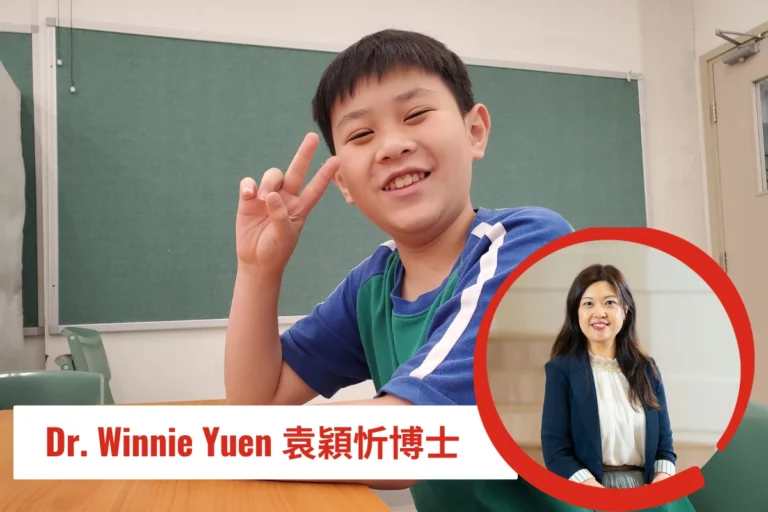
It was half past seven in the morning, and a mother had already asked her son several times to get out of bed. ‘I don’t want to go to school,’ he said, pulling the duvet over his head.
At first, his mother thought he simply did not want to get out of bed. She later discovered that he had recently fallen out with a classmate and had been feeling anxious about going to school each day. She wanted to help, but was unsure whether to offer advice, speak to the school or simply listen.
Growing up is rarely a smooth journey without changes or challenges. A disappointing test result, a disagreement with a friend, a mistake during a performance or adjusting to a new environment can all leave a child feeling unsettled or discouraged. Children respond to challenges and pressure in different ways. Some become quiet or withdrawn, others may lose their temper, or may want to give up as soon as something becomes difficult. A child’s ability to adjust, try again and keep moving forwards is closely linked to psychological resilience.
Psychologist Ann Masten describes resilience as “Ordinary Magic,” emphasising that it is not a rare gift possessed by only a few children. Instead, resilience can be nurtured through the support and relationships that surround a child, especially within the family. Through everyday interactions, families can help children build the strength and confidence to face challenges and adapt to change. The following approaches can help children build the skills and confidence needed to navigate life’s ups and downs.
1. Build Security through Everyday Connection
According to psychologist John Bowlby’s attachment theory, parents can provide a ‘secure base’ from which children explore the world. This does not mean shielding children from every difficulty. It means letting them know that when they feel worried or experience a challenge, someone will be there to listen, comfort, and support them. Knowing that they have a safe place to return to gives children greater courage to face challenges and try again when things do not go to plan.
This sense of security grows through ordinary moments together. A greeting when a child comes home, a chat before bedtime, or simply giving a child full attention when they want to talk can help the child feel noticed and valued. These moments can help children feel more comfortable sharing their experiences, thoughts and feelings. Research also suggests that having at least one stable and supportive adult, together with opportunities to practise coping and problem-solving, provides an important foundation for children’s resilience.
2. Make Room for Difficult Feelings
When children cry, lose their temper, or feel anxious, parents may be quick to say, ‘Don’t cry’ or ‘It’s not such a big deal’. Rather than rushing to reason with them, parents can first put their child’s feelings into words: ‘You seem disappointed’ or ‘This seems to be making you worried.’ Accepting emotions does not mean accepting every behaviour. It means recognising a child’s feelings without judgment, so that they feel heard and supported. When parents stay calm and acknowledge difficult emotions, children gradually develop their own ability to regulate and cope with those feelings. Once those feelings have settled, children have more room to think about what happened and what they might do next. Being able to regain emotional balance andnmove forward after a difficult experience is an important part of resilience.
3. Give Children Space to Work Things Out
Parents often want to solve problems for their children. Yet when children are given suitable support and enough room to think through a difficulty themselves, they can develop a stronger sense of self-efficacy, which means believing that they are capable of dealing with challenges. The more children develop this belief, the more willing they are to face difficulties and keep trying after setbacks.
Instead of immediately offering an answer, parents can ask: ‘What feels most difficult at the moment?’ or ‘What could you try?’ If the child is unsure, the parent can suggest a few possibilities and allow the child to consider and choose between them. This does not mean leaving children to cope alone. Parents can stay by their side, offering guidance without taking over. Each opportunity to think, make a choice, and take action helps children develop the belief: ‘I can find a way through this.’
4. Notice the Strengths Children Show in the Process
Children may take one disappointing result as evidence that they are not capable. While helping them express their feelings, parents can offer a broader perspective: ‘Things did not go as well as you hoped this time, but that does not mean you will never be able to do it.’ When children understand that ability is not fixed and can develop through learning, practice, and changing their approach, they are more likely to continue after a setback. This way of thinking is known as a ‘growth mindset’.
Parents can draw attention to the strengths children show during the process, such as being willing to try, remaining patient, changing their approach, or learning from experience. For example: ‘You understand more than you did last time, and you were willing to try a different way.’ When children say, ‘I can’t do it’, parents might reply, ‘You can’t do it yet.’ This small word leaves room for growth. It helps children see setbacks as part of learning, keep trying and gradually build the resilience they need to face future challenges.
With parents there to understand, guide and support them, children can gradually learn to manage difficulties and move forward. Each experience helps them build the resilience they need to face future challenges.
References:
Bandura, A. (1977). Self-efficacy: Toward a unifying theory of behavioral change. Psychological Review, 84(2), 191.
Bowlby, J. (2008). A secure base: Parent-child attachment and healthy human development. Basic books.
Dweck, C. S., & Dweck, C. S. (2006). Mindset: The new psychology of success (Vol. 276). New York: Random House.
Masten, A. S. (2001). Ordinary magic: Resilience processes in development. American Psychologist, 56(3), 227.
Masten, A. S. (2025). Ordinary magic. Guilford Publications.