Late at night on 31 August 2025, a magnitude 6.0 earthquake struck Afghanistan, destroying large numbers of homes and triggering multiple aftershocks and a severe humanitarian crisis. In the aftermath, Save the Children launched a response in Kunar, Nangarhar and other affected areas. Alongside emergency childbirth support through Mobile Health Teams, we distributed relief items — including hygiene kits, house repair tools and kitchen kits — and provided cash assistance to help affected families meet urgent needs and recover with dignity.
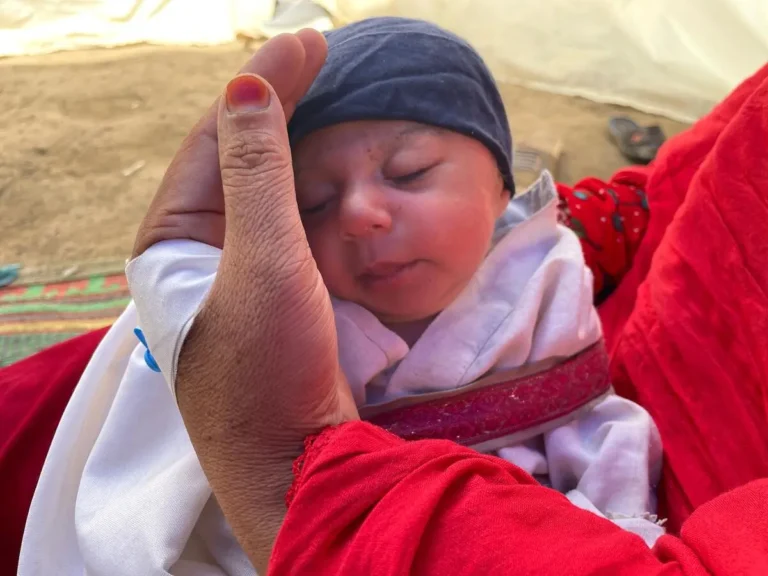
“Our life used to be good — happy — and we had our own home. Now we can only live in a tent,” said Pari, holding her son Mansoor, who was just 12 days old.
The earthquake struck on the very night she was due to give birth. In the darkness, her home collapsed and everything her family owned was buried under rubble. With roads out blocked by falling rocks, Pari — on the verge of labour — endured aftershocks and unstable ground, walking for six hours to reach help. She held on to one hope: reaching a mobile health clinic run by Save the Children for help.
There, Pari reunited with Nafisa, a midwife who had supported her throughout her pregnancy. After losing contact because of the earthquake, their reunion became a ray of light in Pari’s darkest moment.
Resilience of Life in Extreme Conditions
For Nafisa, those days were equally harrowing. It was the first time in her career that she delivered a baby inside a canvas tent in a disaster- affected area — without temperature control and with only basic medical supplies.
Nafisa said, “This was my first time assisting with a delivery as part of the Mobile Health Team. Normally, pregnant women would be referred to the district hospital, but this was an emergency, so we had to manage the delivery ourselves.”
During labour, Pari received timely care and health services through our emergency response. On the fifth day after the earthquake, Nafisa safely delivered Pari’s long-awaited son, Mansoor — her first child after 16 years of waiting.
Acting Fast to Protect Mothers and Babies
Snowfall and the constant threat of rockfalls made delivering aid extremely difficult, with supplies transported along narrow mountain paths. At the time, many pregnant women in the affected areas were still awaiting childbirth, while rough terrain made it hard for relief vehicles to travel, and some villages remained cut off. We provided humanitarian assistance to affected families to ensure children could continue to access basic healthcare, hygiene support and essential supplies in emergencies — helping reduce health risks for pregnant women and newborns. Through emergency medical services, cash assistance, and providing essential kits, we supported families in restoring their lives and rebuilding hope.