
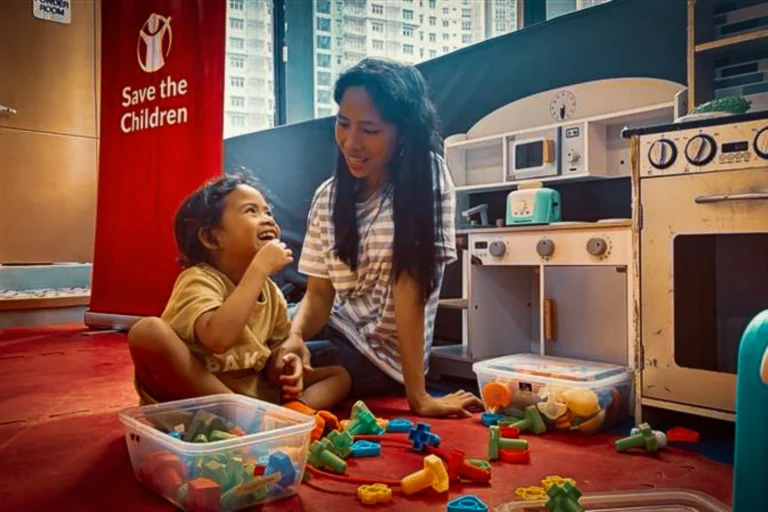
Many young children showing signs of developmental delay or disability are unable to access timely, appropriate support, and caregivers often have a limited understanding of early development needs. Save the Children supports children with early developmental delays and their families in the Philippines, while working together to advocate for improved government policies — so that every child has an equal chance to grow and thrive.
Parents are closest to their children and are often the first to notice subtle changes. Early identification makes it more likely that children can receive timely assessment and treatment. Angelyn, 26, is the primary caregiver of her 5-year-old daughter, Zane. The family lives in Taguig City, in a densely populated and flood-prone community, where public child developmental assessment and therapy services are limited, waiting times are long, and costs can be high — making it difficult for many parents to find the support their children need.
From an early age, Angelyn noticed Zane’s unusual behaviours, such as carefully
lining up toys and avoiding eye contact. After researching online, she suspected developmental delay, but the pandemic made already limited services even harder to access, delaying professional assessment.
Early Intervention Can Change Children’s Future
Later, Zane’s teacher began noticing concerns at school — she was often moving around during class, fiddling with objects in the classroom, and seemed easily frightened. The teacher referred her to Save the Children, allowing Zane to access early assessment and intervention support. Zane received her first developmental assessment at a private therapy centre, where doctors confirmed that she had autism and required a high level of support.
With the programme’s support, Zane began therapy in a safe and caring environment, learning new skills at a pace that suits her. Angelyn proudly shared her daughter’s progress: “She can climb stairs on her own now, no longer needs to be carried, can take public transport with ease, and is willing to interact with strangers.” At home, Zane has also grown more independent — such as putting away her belongings after meals, expressing her needs more clearly, and even trying to buy food outside while her parents kept watch nearby.
To ensure children with developmental delays receive timely support and ease the financial burden of therapy, the programme also provides cash assistance to the family. Just as importantly, it offers parenting training and support, strengthening Angelyn’s confidence as a caregiver. Through parent support groups, she can share experiences with other parents, learn and exchange ideas through online communities. She now feels better equipped to respond to her daughter’s needs with patience—and more confident that she can continue walking alongside Zane as she grows.